
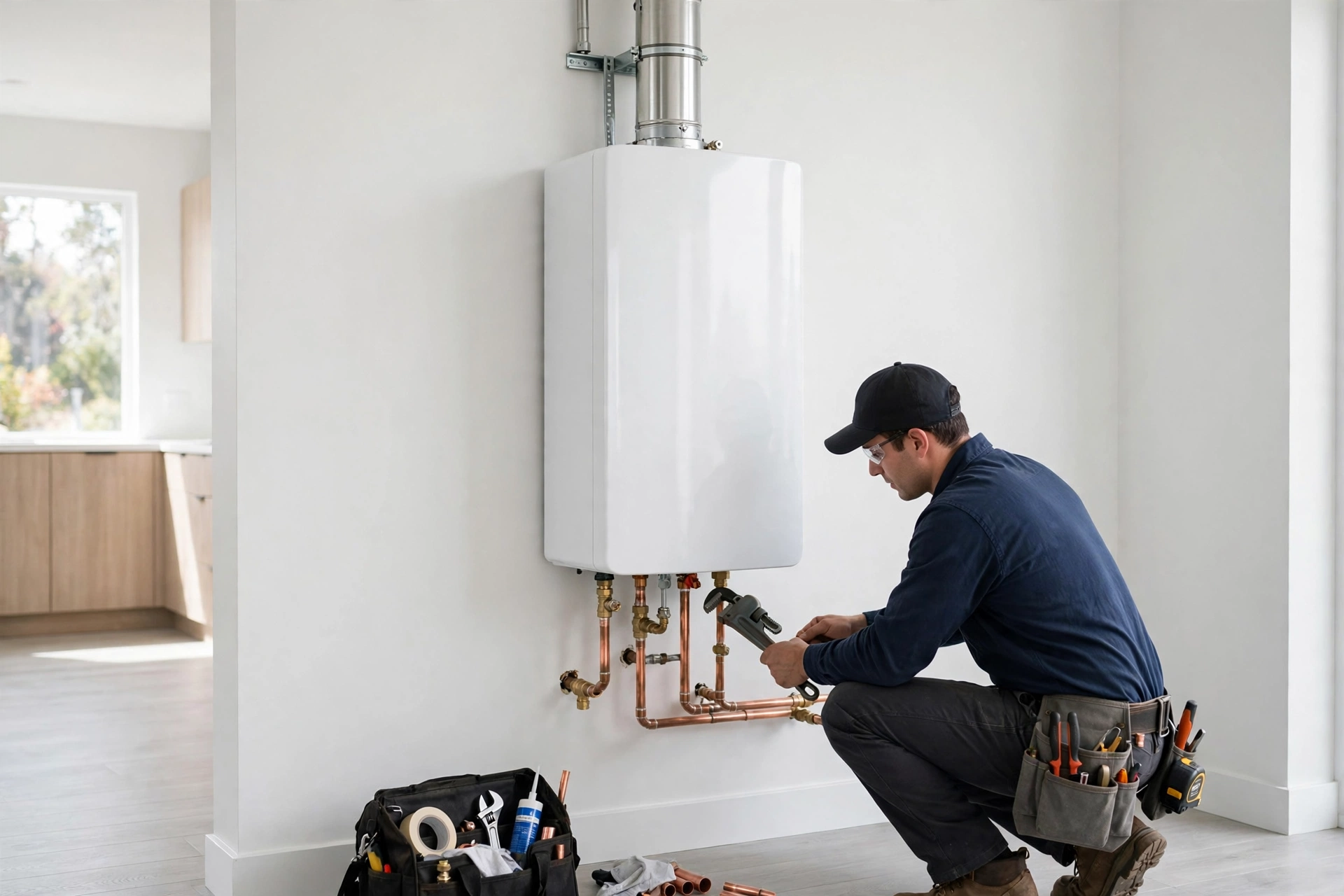
A tankless water heater installation replaces a tank heater with a unit that heats water on demand — or puts a tankless unit into a house that has never had one. It is the one service on this site that is a planned job rather than a repair, and it starts the same way: a look at the house, the gas and electrical supply, and the venting.
The demand for tankless installation is real. Of the tankless phrases tracked in our research, installation and replacement made up the largest share — far more than repair phrases alone. People are switching. But an installation is not a like-for-like swap: a tankless unit needs more gas, more power, or different venting than the tank it replaces, and the visit is where that is worked out.
What an installation involves
- Sizing. How much hot water the household uses at once — showers, dishwasher, laundry — decides the size of the unit.
- Gas or electric. Gas needs a gas line that can carry the load; electric needs a circuit and a panel that can carry it.
- Venting. Gas units need a vent for exhaust. The route, the material and the termination point all matter.
- Water lines. The cold line in, the hot line out, and service valves so the unit can be flushed later.
- Permits. Most cities require a gas or plumbing permit, and sometimes an electrical one. Requirements vary by city.
How an installation visit works
- The call. What you have now, what you want, and how many people use hot water at once.
- The look. Gas supply, electrical panel, venting route, water lines, and where the unit will go.
- The plain answer. The unit size, what needs upgrading, what permits are needed, and what it takes.
- The install. The old tank comes out, the new unit goes in, and the gas, venting and water lines are connected.
- The test. The unit runs through a full hot-water cycle at every tap before the provider leaves.
Tank-to-tankless conversion
The most common install is a conversion: the old tank comes out and a tankless unit takes its place. The house gains the space the tank used, and the endless hot water that a tank cannot give. What usually needs changing is the gas line — a tankless unit draws more gas than a tank — and the venting, because a tankless unit vents differently from a tank. In some houses the electrical panel needs work too, for the unit's controls and any condensate pump. None of that is a surprise on the day; it is all found on the first visit.
What affects the cost of an installation
The unit itself is the biggest factor — size and brand. Then the gas line: a house with a small gas line needs a bigger one. Then the venting: a short, straight vent is a small job, and a long one through a finished house is not. Then the panel, if the electrical work needs upgrading. Then the permits, which vary by city. This site does not publish prices, because the honest price is set once the house has been seen.
Questions people ask
How much does a tankless water heater installation cost?
It depends on the unit, the venting, whether the gas line or the electrical panel needs upgrading, and the permits in your city. This site does not publish prices because no two installs are the same. Call (877) 418-1589 and the provider will look at the house before setting a price.
Can a tankless unit replace my old tank water heater?
Usually, yes — that is the most common install. The old tank comes out, the tankless unit goes on the wall, and the gas line, venting and water lines are adapted. Some houses need a bigger gas line or a panel upgrade, and that is found out on the visit, not guessed at.
Gas or electric — which tankless should I choose?
Gas heats faster and handles a whole house more easily; electric is simpler to install where gas is not available, but needs a heavy electrical circuit. The right choice depends on the house — the gas supply, the panel, and how much hot water the household uses at once.
Do I need a permit to install a tankless water heater?
In most cities, yes — a gas or plumbing permit, and sometimes an electrical one. Permit requirements vary by city, and the provider handles them. Do not let anyone install a gas unit without the permit the city requires.
Related pages
In your city
Start with a call
Describe the symptom — no hot water, an error code, lukewarm water, or a leak — and an independent local provider takes it from there.
Hot water out? Call now.
One call connects you with an independent local tankless provider. Describe the symptom — the rest is the visit.